
The AI Micro-Drama Playbook: Turn Your Customer's Story Into a One-Minute Film
A micro-drama is a one-minute animated film. Two or three characters, one argument, one turn, one payoff. Your offer is the turn.
We made "The video I didn't film": a founder who stopped posting, a co-founder who doubts him, and the client call that changes everything. Three characters, real dialogue, 57 seconds. No actors, no camera, no studio. This page shows how it works and how to make one for your business.
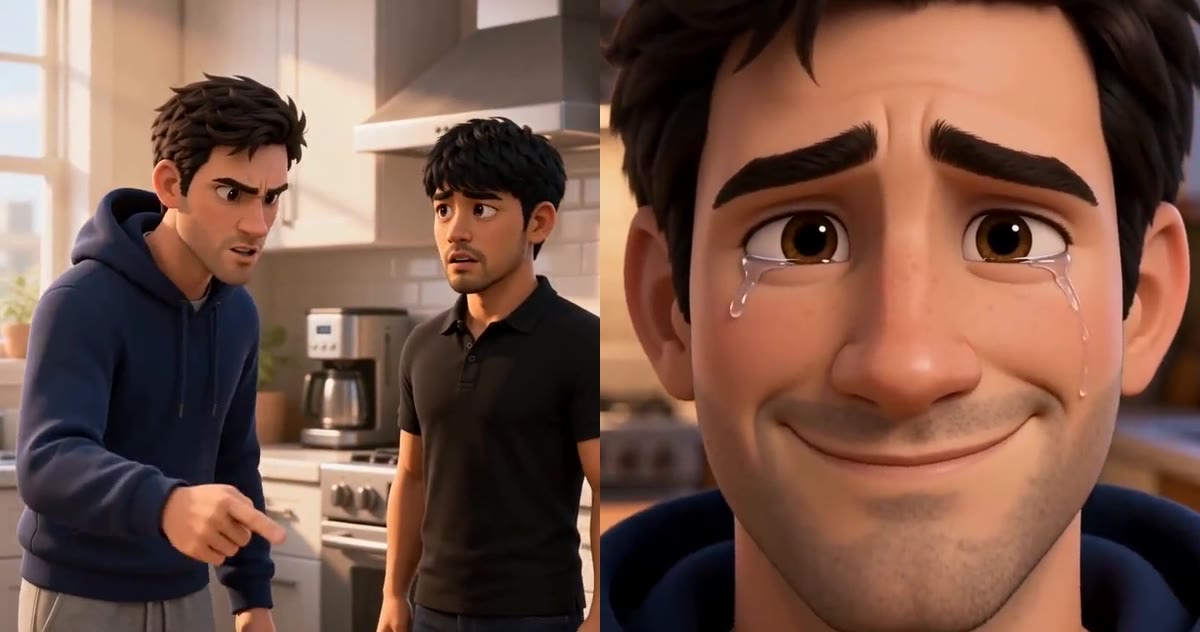
The doubter, before and after: frames from our micro-drama "The video I didn't film", made with AI.
Character, mascot or micro-drama?
They do different jobs.
- An AI character is one made-up person who lives your customer's problem, the same joke every video. See The AI Character Brief.
- An AI mascot is your brand as a hero who beats your customers' objections. See The AI Mascot Playbook.
- An AI micro-drama is a small story with a cast. People talk to each other, someone doubts, someone is proved wrong. People watch to see how it ends.
Use a micro-drama when the thing stopping your buyers is a conversation they've already had: with a partner, a boss, a client, or themselves.
How our film works
"The video I didn't film", made with AI. Watch it with sound: the voices are part of the film.
- The accusation (0-8s). The co-founder: "Three weeks, Joon? You haven't posted in three weeks?" The conflict lands before anyone can scroll.
- The struggle (8-20s). Retakes, 112 views, a late night. "Maybe he's right."
- The turn (20-36s). A client calls about a video he never filmed. His AI clone made it.
- The close (36-40s). "What does it cost?" "Five thousand a month." "Deal."
- The payoff (40-53s). The doubter goes quiet, then smiles. "I was wrong about you."
- The loop (53-57s). "I've got another founder for you." Cut to black.
The offer never gets pitched. It shows up as the thing that changed the ending.
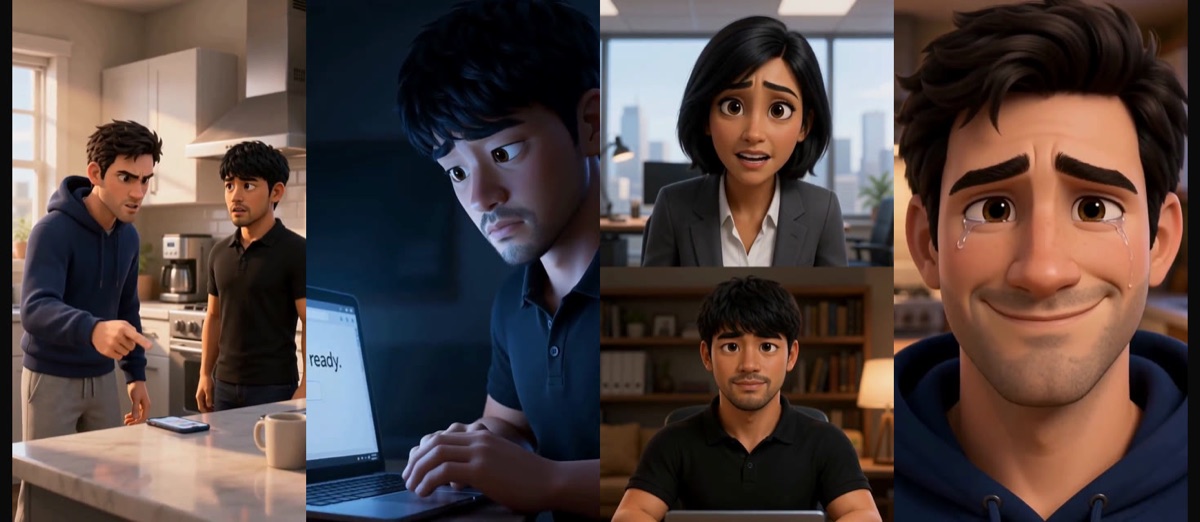
Four beats: the accusation, the low point, the call, the payoff.
Rules that keep it safe
- Call it a dramatization. Never present a scripted story as something that really happened.
- Say it's AI. Use the platform's AI-content label.
- No made-up results. If a real client got a result, use their real numbers with their permission. The film shows a situation, not proof.
- No real likenesses without consent. Invent your cast, or use a person who has agreed and approves every line.
- Regulated industries: health, legal and financial services often have advertising rules. Check before you post.
What a micro-drama can't do
A micro-drama earns attention and makes people feel the problem. It doesn't close the sale. Somewhere after the video, a real person should show up and answer the question the story raised. If you don't have time to film that every week, a founder AI clone can do it from scripts you approve. See How Businesses Use AI Avatars to Scale Content.
Questions
Do I need to know animation?
No. You need the script, three reference sheets and the patience to check each clip.
How long should it be?
Under 75 seconds. Ours is 57. Start with a 20 to 30 second scene with two characters, and make the long version once that works.
Can I be in it?
Yes, if it's your choice. Our hero is an animated version of the founder, made from his own portrait. Never put someone else in without their consent.
Mascot, character or micro-drama: which first?
If buyers have one big objection, start with a mascot. If they need to feel seen, start with a character. If they've had the same argument a hundred times, make it a micro-drama.
Unlock the step-by-step micro-drama method
Every step with the prompts we use. Free, opens instantly.
Want this set up for your business?
We turn these workflows into working marketing and sales systems.